Tea & snacks
Shri Gurubhyo Namah
With the blessings of our Gurus and family
Sankara Academy Of Music & ArtsPortland, Oregon Presents
Aditya Kumar’sMridangam Arangetram
An evening where tradition meets a young artiste’s first full step onto the Carnatic stage.
SundaySeptember 6, 2026
3:30 PMHECSA Portland Balaji Temple
A family invitation
We would be honored to share this milestone with you.
With the blessings of our Gurus and family, we warmly invite you to join us as Aditya takes his first full step onto the Carnatic stage.
Please join us
Sunday, September 6, 2026
HECSA Portland Balaji Temple · Grand Auditorium Level 4
6100 SW Raab Road · Portland, Oregon 97221
Music program
3:30 PM
Grand Auditorium · Level 4Seating begins promptly at 3:00 PM.Dinner
Following the performance
Dining Hall · Level 3Buffet-style Indian vegetarian dinner.One tradition · Seven musical journeys
Meet the Musicians
From the Gurus who shaped Aditya’s musical foundation to the artistes who join him on stage, each voice carries the tradition forward.
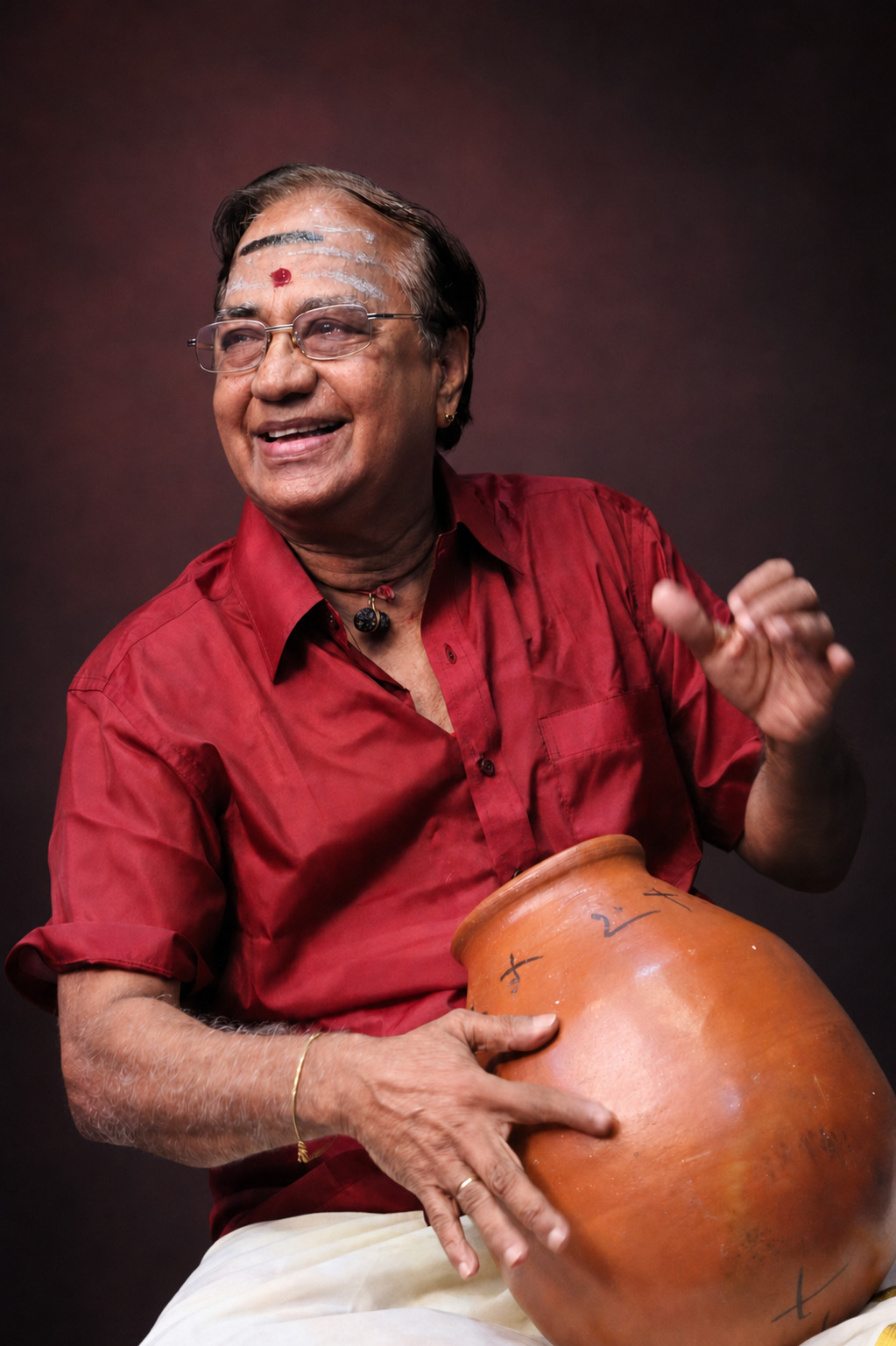
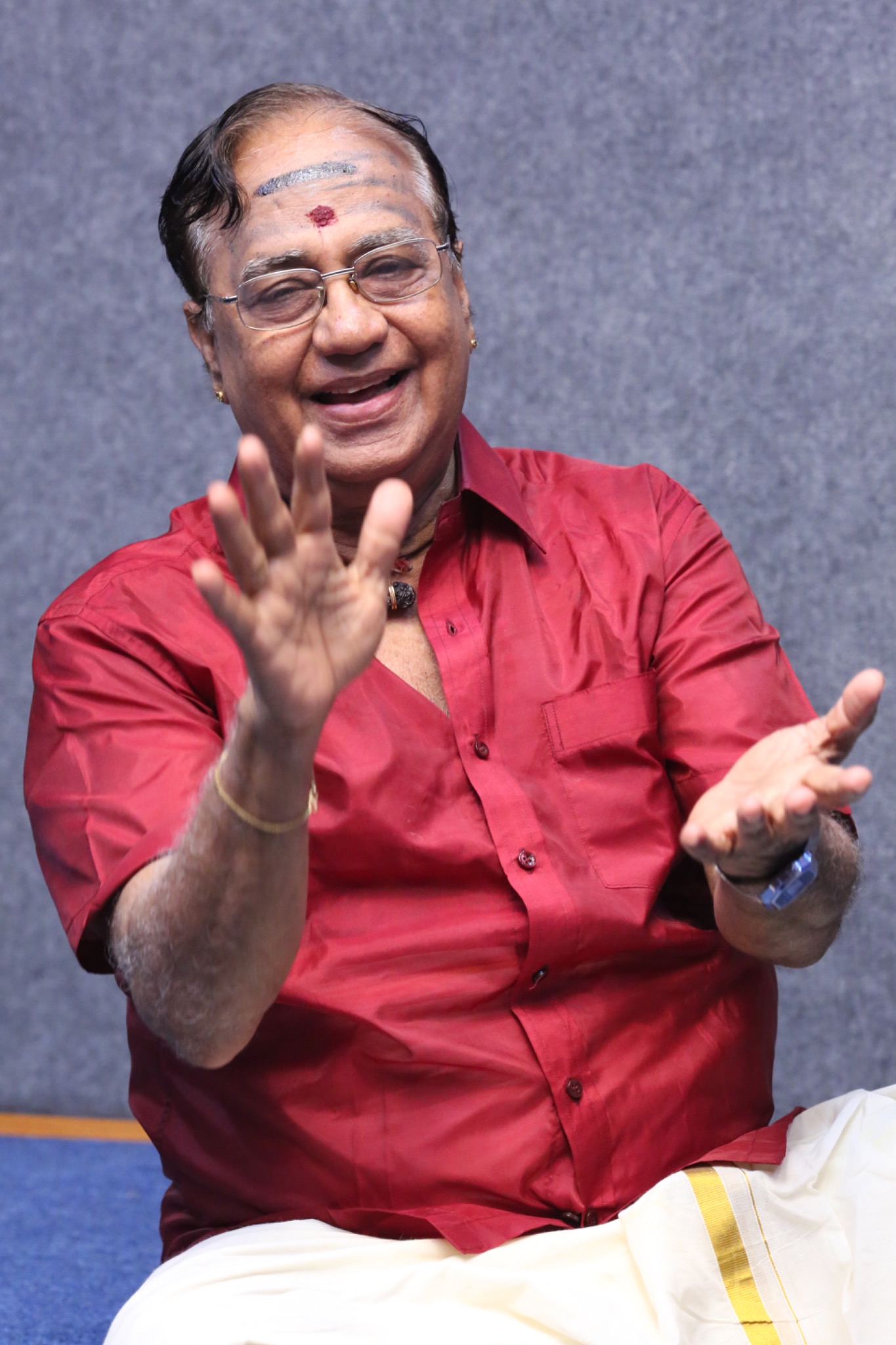
The maestro
Sangeetha Kala Acharya Sri T. H. Subashchandran
Affectionately, Subash MamaSangeetha Kala Acharya Sri T. H. Subashchandran (1946–2020), affectionately known to us as “Subash Mama,” was a renowned ghatam player and konnakol artiste. Konnakol is the intricate art of enunciating percussion notes in various rhythmic cycles at rapid speeds. He was a versatile master of percussion who taught all forms of Carnatic percussion instruments.
Subash Mama built a global reputation through his spellbinding performances around the world, including at the United Nations, with the New York Philharmonic under Zubin Mehta, the Oslo Philharmonic with Dr. L. Subramaniam, and the Moscow Philharmonic in the former U.S.S.R.
He collaborated with many all-time greats, including violinist and conductor Yehudi Menuhin and drummers Tony Williams and Max Roach.
Guru
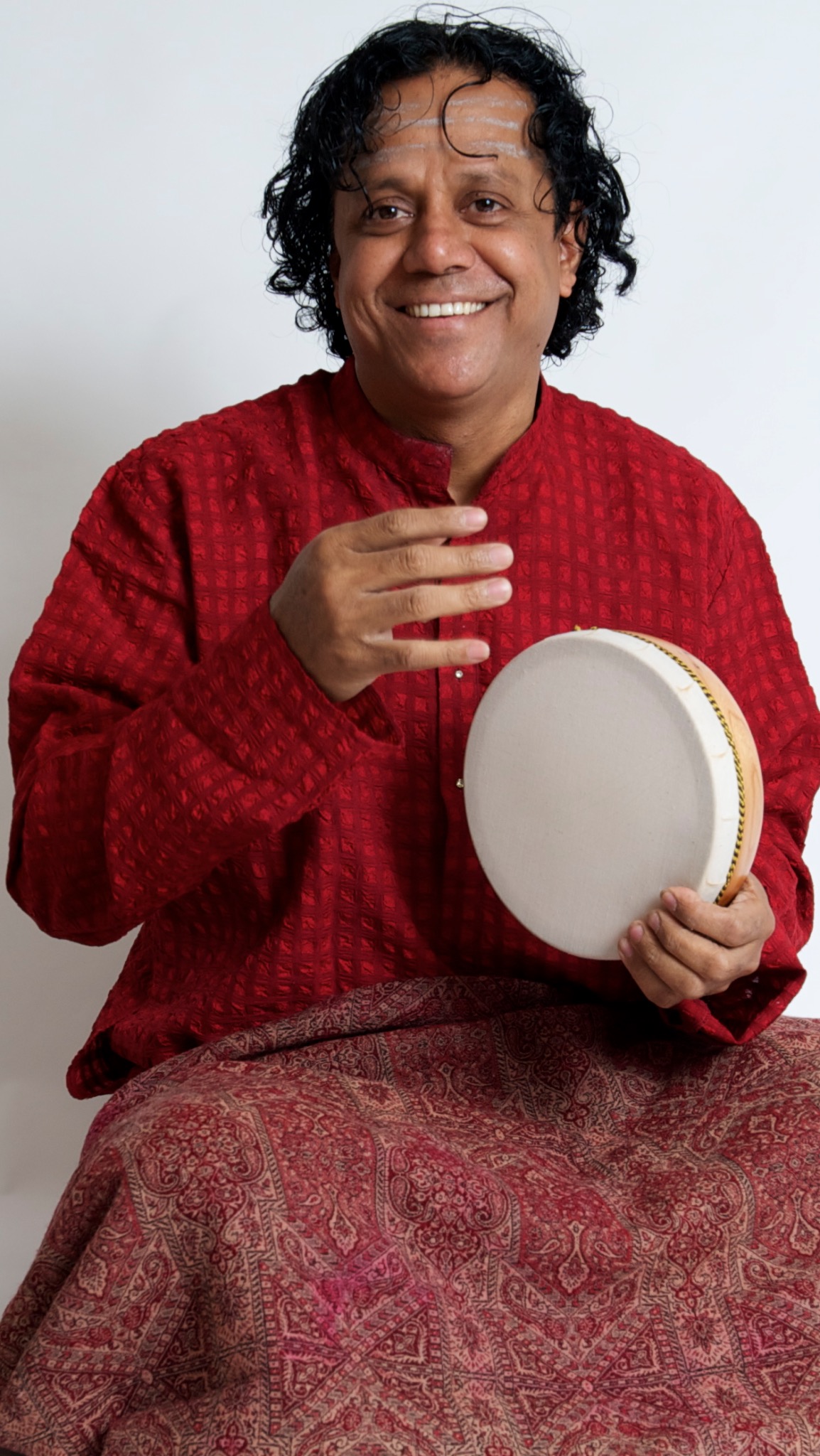
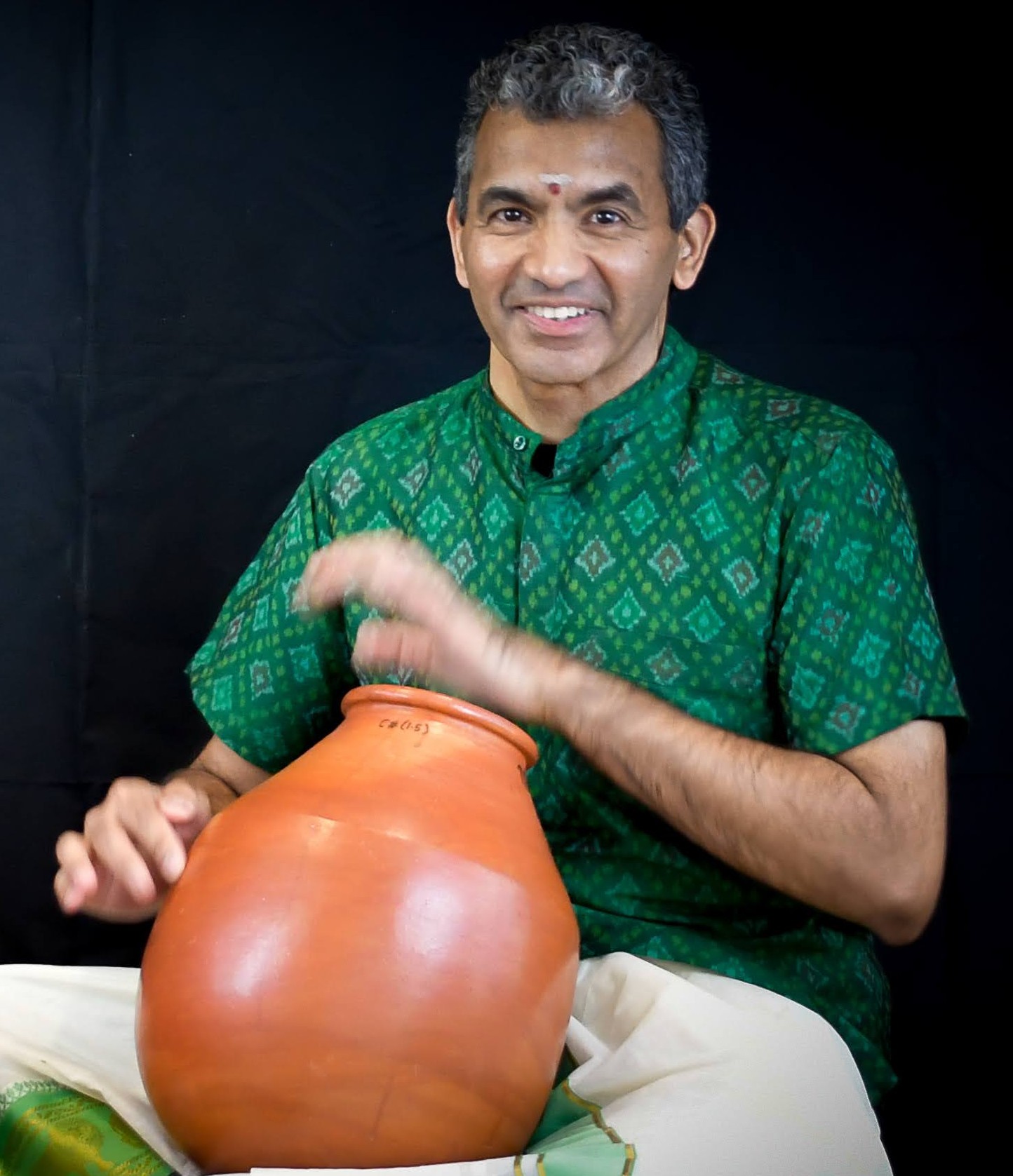
Vidwan “Kanjira” Ganesh Kumar
Affectionately, Ganesh MamaVidwan “Kanjira” Ganesh Kumar is among the world’s leading exponents of the kanjira and a senior disciple of Vidwan Sri T. H. Subashchandran. His work has been instrumental in expanding the scope of the kanjira beyond Indian Carnatic classical music. He is a recipient of the Fulbright Fellowship from the U.S. Department of State and the Maryland State Fellowship for Classical & Folk Arts.
He has accompanied many eminent Carnatic music artistes, including Smt. M. S. Subbulakshmi, Dr. M. Balamuralikrishna and Dr. L. Subramaniam. He has also performed with many Western jazz greats in the United States and Europe. A testament to his versatility and creativity is his invention of the synthetic kanjira, released by the Cooperman Drum Company in Vermont as part of its Artists Innovation Series. The Hindu has described his collaborations as helping to develop a new genre of Indo-Western classical music.
He has released a two-volume instructional DVD titled “The Art of Kanjira” to reach students of kanjira and percussion around the world.
Guru
Shri Murali Krishna
Carnatic percussion & vocalMurali Krishna is a Carnatic percussionist and vocalist.
His formal introduction to percussion began at the age of seven on the mridangam with Sri K. M. Vaidyanathan, an expert of the Harihara Sarma school of percussion.
He transitioned from the mridangam to the ghatam under the tutelage of Sri T. H. Subashchandran, also of the Harihara Sarma school. Now continuing advanced lessons from Sri Kanjira Ganesh Kumar, he can also claim the rare honor of being taught by three generations of percussionists from the same lineage.
Murali also learned vocal music from his mother, Smt. Radha Krishna of the Alathur school of Carnatic music. He now advances his musical education with his sister, Smt. Meera Krishna of Seattle. His dual training affords him a unique insight into the interplay between rhythm and melody.
Melodic accompaniment
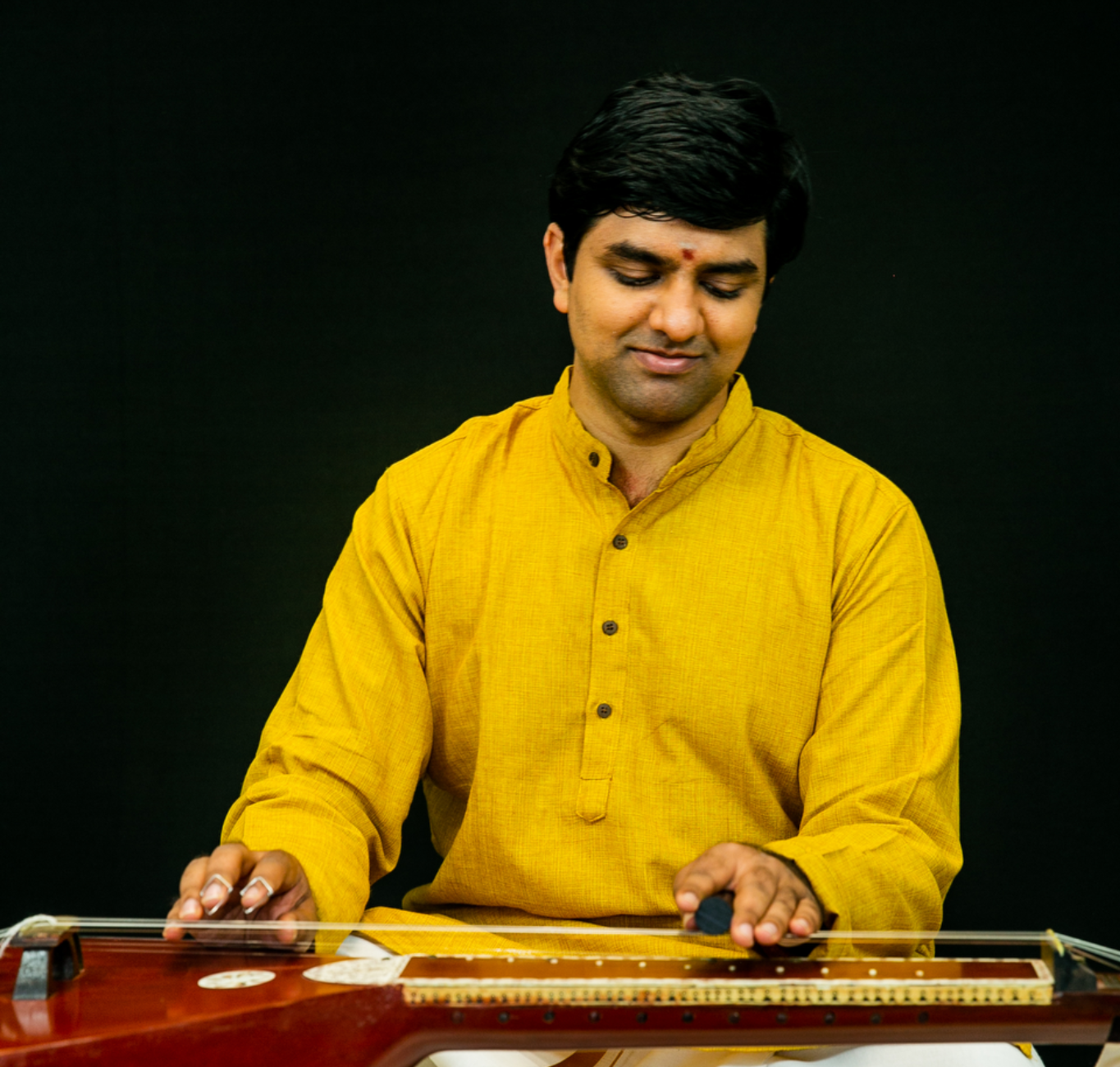
Shri Vishaal Sapuram
ChitraveenaVishaal Sapuram is a Carnatic musician and exponent of the rare chitravina, an ancient Indian slide guitar. A disciple of chitravina maestro N Ravikiran, he began his performing career at age nine. He has performed at venues like the Chicago World Music Festival, Esplanade’s Kalaa Utsavam (Singapore), Navatman’s Drive East (New York), several leading sabhas in India, and so on. He has also collaborated on concepts like ‘Unfretted’, which explores the creative frontiers of the Carnatic concert format, and ‘Immersed in Infinity’, a showcase of spirituality in the art form. Vishaal is a highly proficient vocalist as well.
His music has been praised as ‘showing his musical wisdom’, its ‘sonorous sound taking the audience into a trance’. Vishaal is also a respected music teacher, and has been teaching since the age of ten. A student of the poetry of Carnatic music, he is knowledgeable in Sanskrit, Telugu, and Tamil, and has written English translations for many compositions.
Melodic accompaniment
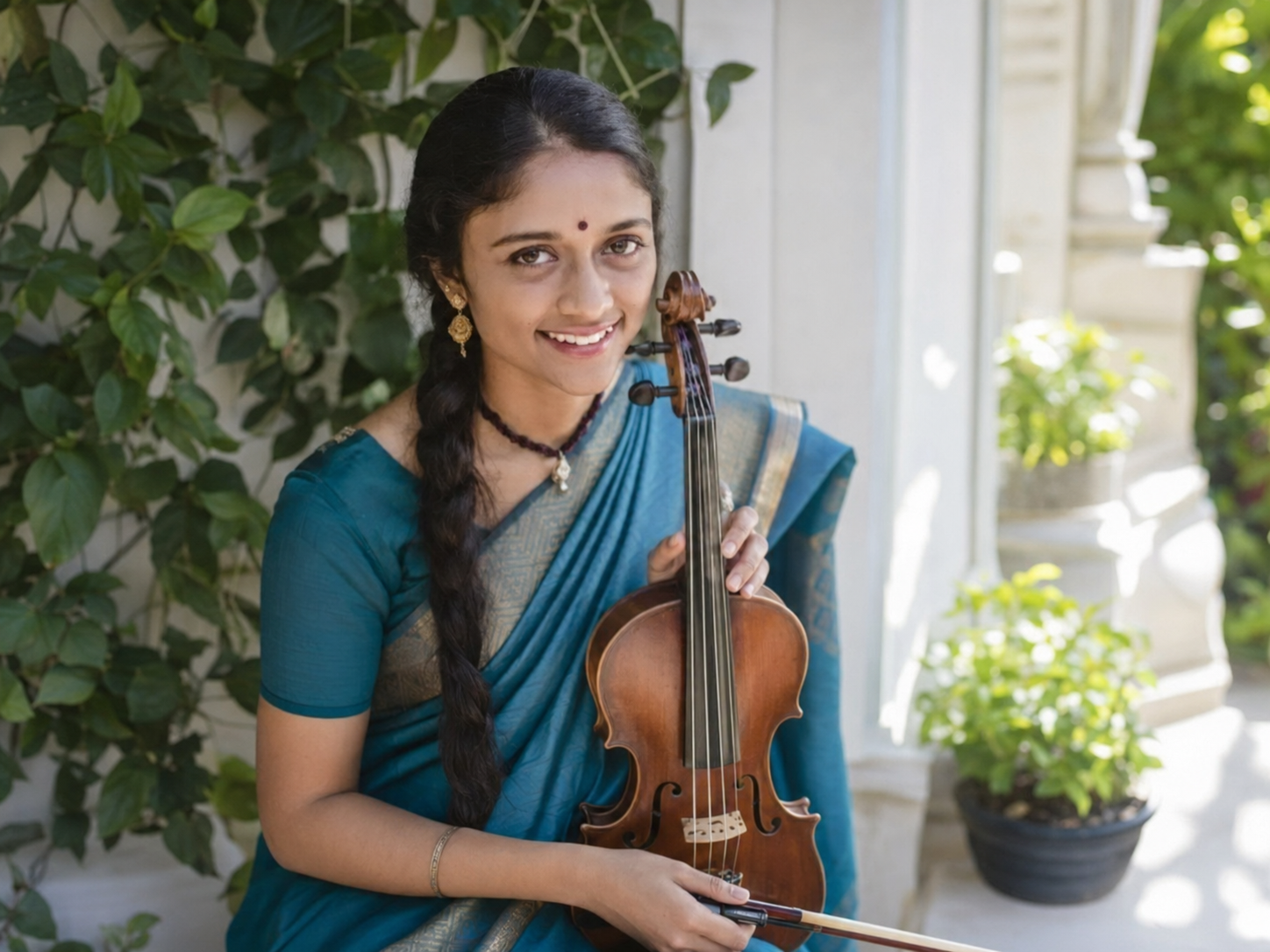
Kum. Sruti Sarathy
ViolinSruti Sarathy is a versatile Carnatic violinist based in the Bay Area and Chennai. Sruti is a disciple of Guru Smt. Anuradha Sridhar, a sixth-generation violinist hailing from the eminent Lalgudi family of musicians. Sruti’s music brings out the voice of the Indian violin in a contemporary and imaginative way. Sruti regularly accompanies leading Carnatic musicians including Flute Shashank, TM Krishna, Sikkil Gurucharan, Sudha Raghunathan and many others. She has received awards from the Music Academy three years in a row for her performances. She is also a Fulbright Scholar, and has trained in Hindustani music under Vidushi Kala Ramnath.
Some of her other accolades include the Mysore T Chowdiah Memorial Award for outstanding violinist from the Cleveland Thyagaraja Aradhana in 2023, and the Rukmini Rajagopalan Memorial Award from Shruti Swara Laya in 2024. Sruti is the creator & lead composer of the project Songs for Many Lives, which tells stories of the South Asian diaspora through new Carnatic compositions.
Accompanying percussionist
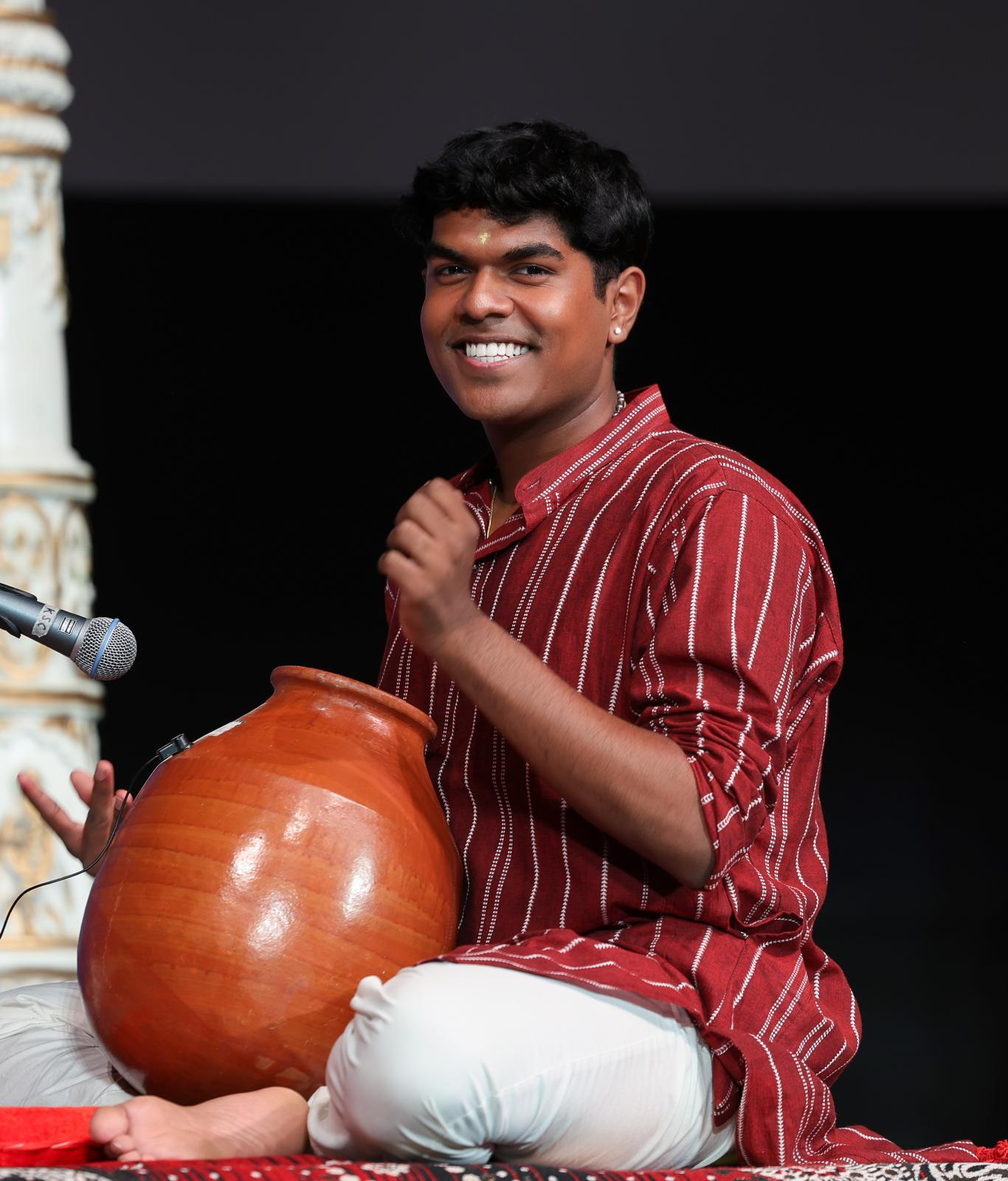
Srikrishna Prasannan
GhatamSrikrishna Prasannan is a young, emerging ghatam artist from Portland, Oregon. He began learning mridangam from Sri Shankar Viswanathan in Portland, later transitioning to ghatam under Sangeetha Kala Acharya, the late Sri T. H. Subhash Chandran, and performing his arangetram in 2019 under his guidance. He currently continues advanced training under Kanjira Vidwan Sri Ganesh Kumar of Chennai, and also receives guidance from Sri Muralikrishna and Smt. Sreevidhya Chandramouli in Portland, OR.
Krishna performs regularly across the US, including the Cleveland Thyagaraja Aradhana, and is a recurring performer at the Chennai Margazhi Music Season, often accompanying senior vidwans. He is an Indian Raga Fellow for Ghatam.
Krishna has been recognized for his contributions to Carnatic music as a youth, receiving the "Yuva Kala Ratna" award from YADA and the "Youth Cultural Ambassador" award from ICPAO. He is also a Carnatic Ghatam and Upa-pakkavadyam Faculty Member at YADA University.
Besides ghatam, Krishna also plays kanjira for dance programs and arangetrams.
Srikrishna is studying Architecture at the University of Oregon and is an Eagle Scout.
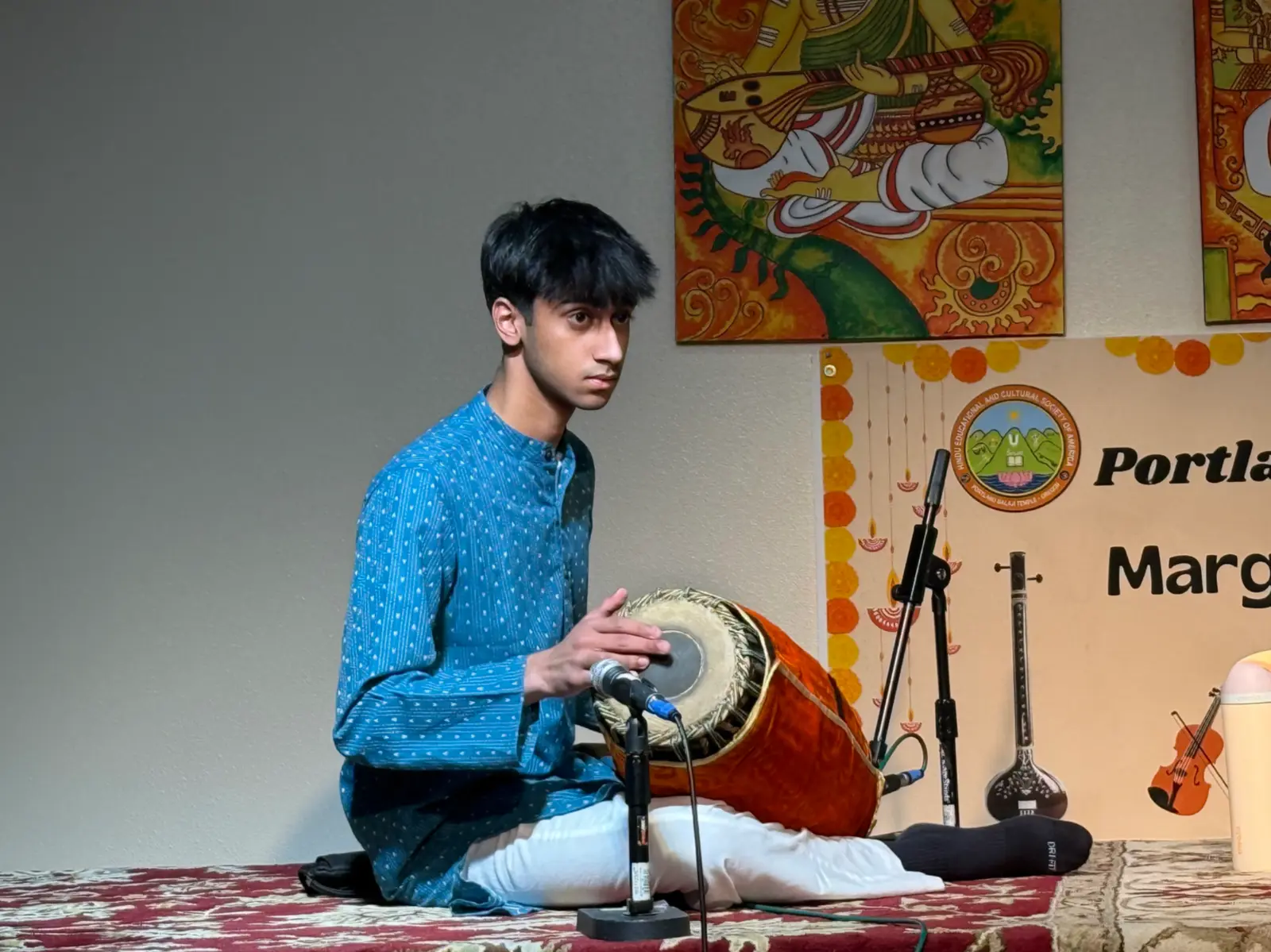
Debut percussionist
Aditya Kumar
MridangamAditya is a rising senior at Jesuit High School and has studied the mridangam since 2019 under Vidwan Shri Ganesh Kumar and Shri Murali Krishna. He regularly accompanies Carnatic musicians at the annual Marghazhi Utsavam and other community events. He also trained in Carnatic vocal music under Guru Smt. Smitha Chakravarthy and continues to learn Carnatic violin under Guru Shri Anand Rangarajan, experiences that bring a strong sense of melody and musical conversation to his approach to rhythm.
Beyond music, Aditya is passionate about computer science, robotics and gaming. He was a member of Jesuit’s varsity robotics team, and his team placed second in the Wharton High School Data Science Competition, competing against nearly 700 teams from 48 countries.
His arangetram marks both a milestone and a beginning: a grateful step onto the Carnatic stage, shaped by his Gurus, family and community.
The first step onto the stage
What is an arangetram?
An arangetram is the formal debut of a student in Indian classical dance or music, marking the transition from learner to independent performing artiste.
Derived from the Tamil words arangu (stage) and etram (ascent), it literally translates to “ascending the stage.” It is sometimes mistaken for a graduation. In truth, it is a threshold: the Guru entrusts the student to carry the tradition before an audience, and the student accepts a deeper responsibility to the art.
This is our moment of gratitude to the Gurus who taught him, the fellow artistes who make music a conversation, and the community that gathers to listen.
Guru-Shishya Parampara
A rhythm passed from hand to hand.
The chart shows the broader Harihara Sarma tradition and the two direct Guru paths that meet in Aditya’s training.
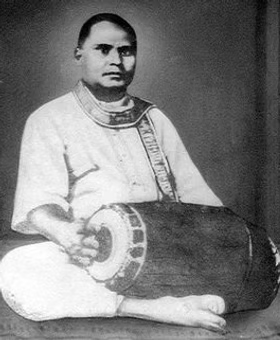 The sourceThanjavur Vaidyanatha Iyer
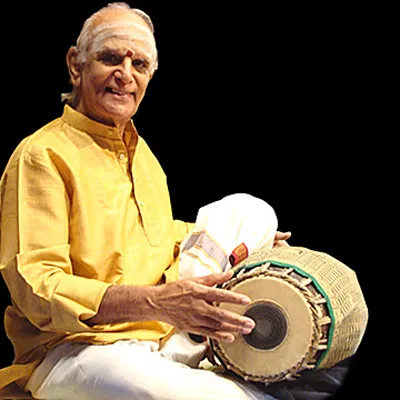 Umayalapuram K. Sivaraman
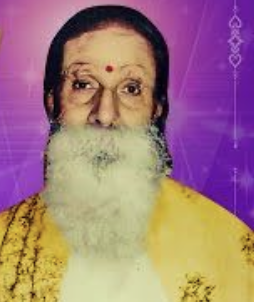 The schoolT. Harihara Sarma
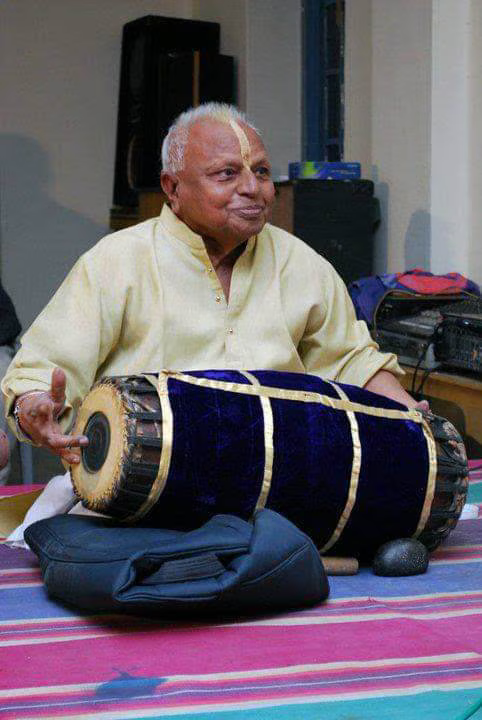 T. K. Murthy
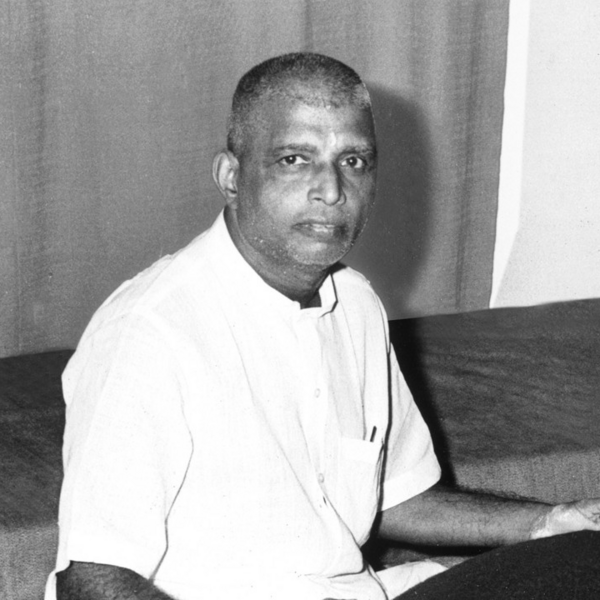 Palghat Mani Iyer
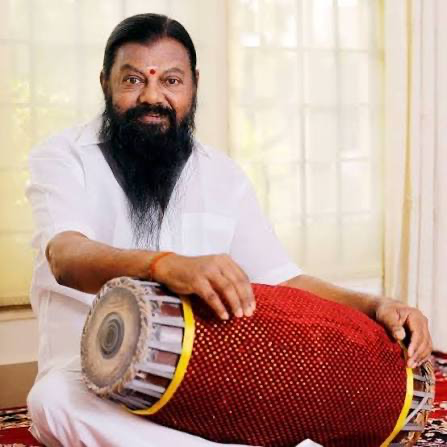 Karaikudi Mani
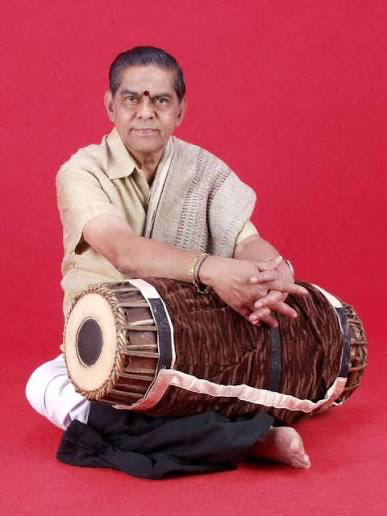 K. M. VaidyanathanSubash MamaT. H. Subashchandran
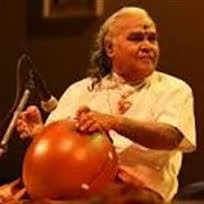 T. H. Vinayakram
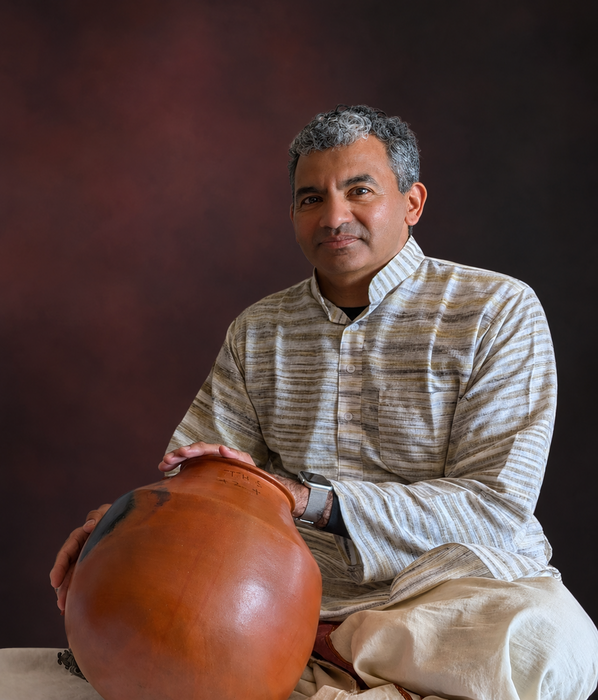 GuruMurali KrishnaGuruGanesh Kumar
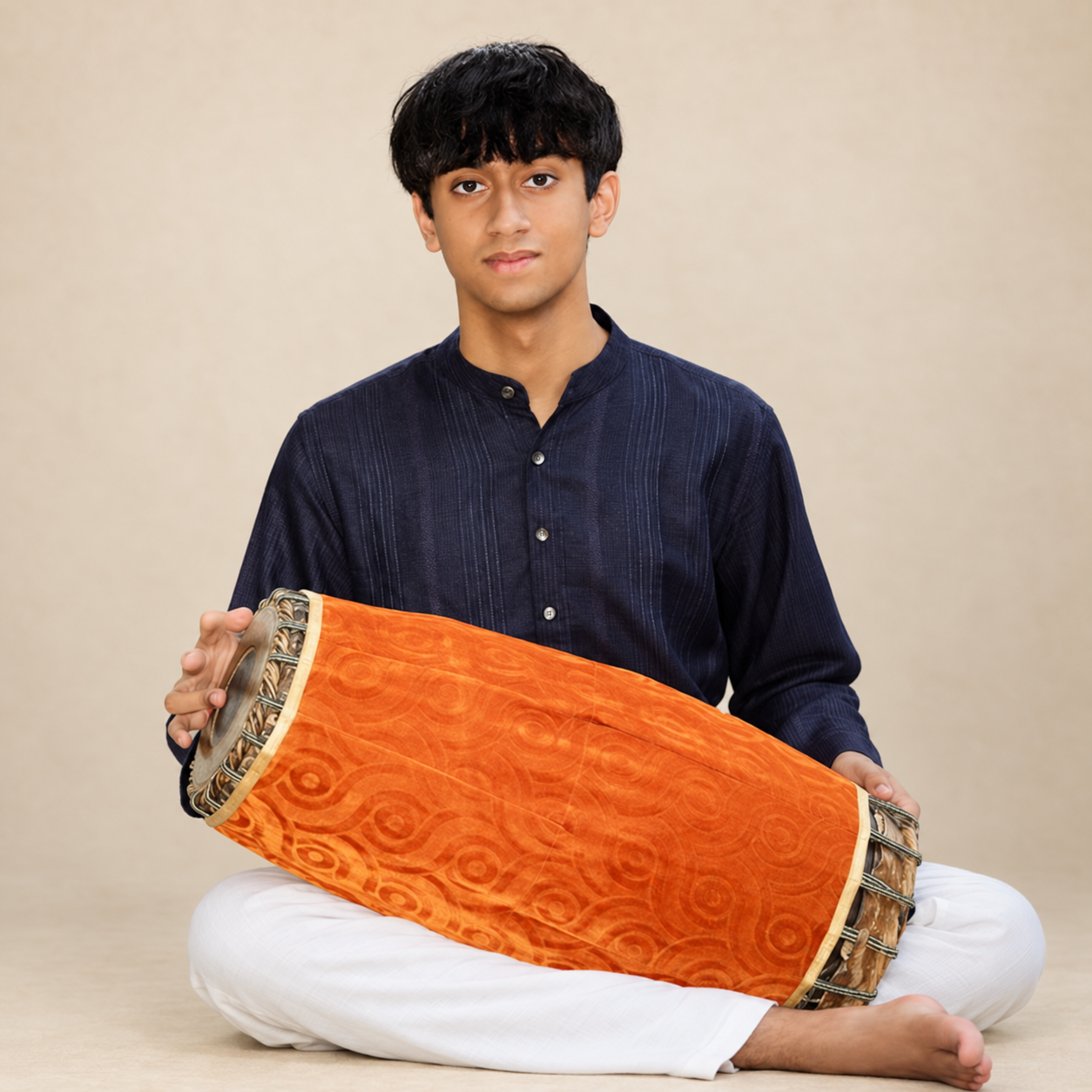 DiscipleAditya Kumar
The heartbeat of Carnatic music
Meet the mridangam
A double-headed barrel drum capable of crisp articulation, ringing tone and deep, bending bass. In a Carnatic concert, it does not simply keep time - it listens, anticipates and answers.
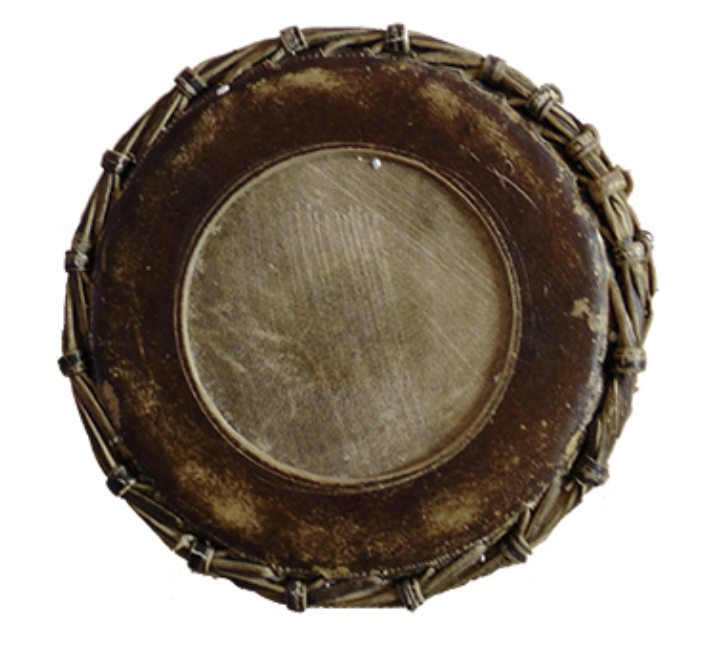
Thoppi
The larger head brings the resonant bass voice.
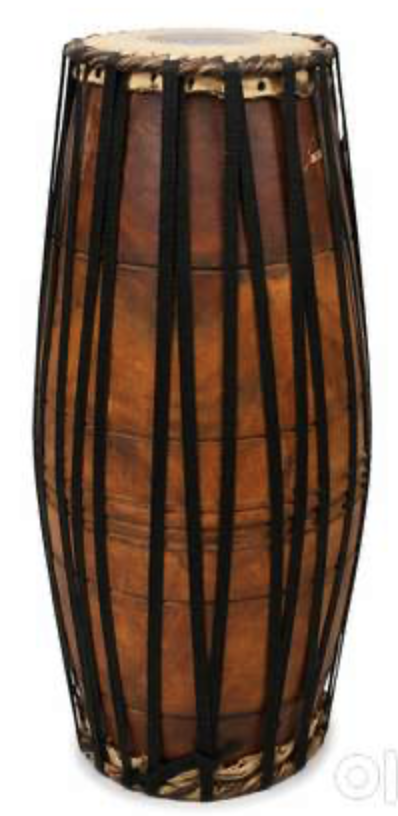
Jackwood shell
The barrel-shaped body carries and colors the sound.
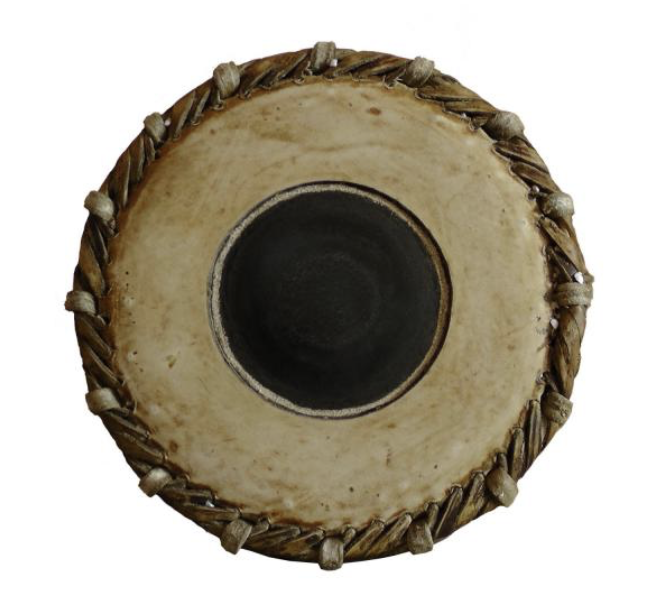
Valanthalai
The smaller head gives clarity, pitch and articulation.
Feel an eight-beat cycle
Adi tala, one pulse at a time.
Follow the moving accent. The first beat is “samam” — the point where the cycle resolves and begins again.
1Tha2Ka3Dhi4Mi5Tha6Ka7Jo8Nu